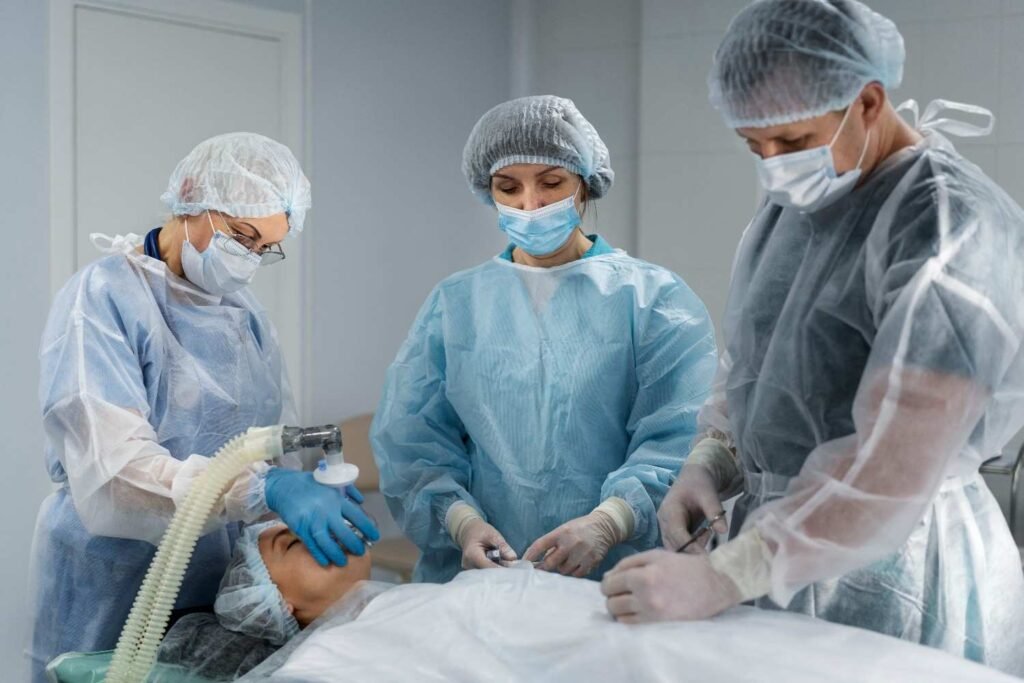
Traumatic injuries caused by road accidents, sports injuries, falls, workplace incidents, and high-impact accidents require immediate medical attention and expert surgical care. The Best Trauma Surgeon in Noida combines years of clinical experience with modern surgical techniques to stabilize injuries, restore mobility, and minimize long-term complications.
Today’s trauma surgery has evolved significantly. Instead of relying solely on traditional open procedures, trauma surgeons now use minimally invasive techniques, computer-assisted planning, advanced implants, and evidence-based treatment protocols to improve recovery and preserve normal function.
For fast information, direct chat with us on WhatsApp.
Whether a patient has multiple fractures, joint injuries, pelvic trauma, or complex limb injuries, choosing the right trauma surgeon plays a crucial role in achieving the best possible outcome.
Understanding Trauma Surgery
Trauma surgery is a specialized branch of orthopedic care focused on diagnosing and treating injuries involving bones, joints, muscles, tendons, ligaments, and surrounding soft tissues following accidents or severe physical trauma.
The primary goals include:
- Saving the injured limb
- Restoring bone alignment
- Stabilizing fractures
- Preserving joint function
- Preventing infection
- Reducing long-term disability
- Helping patients regain mobility safely
Early diagnosis and timely surgical intervention often lead to better functional recovery and fewer complications.
Why Advanced Trauma Surgery Matters
Modern trauma surgery is designed to:
- Reduce tissue damage
- Improve fracture healing
- Allow early movement
- Minimize blood loss
- Lower infection risk
- Improve surgical precision
- Reduce hospital stay
- Accelerate rehabilitation
These advantages have transformed trauma care over the past decade.
Common Injuries Treated by the Best Trauma Surgeon in Noida
Patients commonly seek trauma care for:
- Road traffic accident injuries
- Sports injuries
- Industrial accidents
- Crush injuries
- Multiple fractures
- Open fractures
- Pelvic fractures
- Hip fractures
- Shoulder injuries
- Knee injuries
- Wrist fractures
- Elbow fractures
- Foot and ankle injuries
- Complex joint injuries
- Ligament injuries associated with fractures
Every injury requires individualized treatment planning.
Advanced Surgical Techniques Used in Modern Trauma Care
1. Minimally Invasive Fracture Surgery (MIPO)
Minimally Invasive Plate Osteosynthesis (MIPO) is one of the most significant advancements in orthopedic trauma surgery.
Instead of making large incisions, the surgeon inserts specialized plates through small openings while preserving surrounding muscles and blood supply.
Benefits
- Smaller scars
- Less pain
- Lower infection risk
- Faster recovery
- Better bone healing
- Reduced soft tissue damage
This technique is commonly used for long bone fractures.
2. Locking Plate Fixation
Locking plates provide enhanced stability, particularly in:
- Osteoporotic bones
- Complex fractures
- Multi-fragment fractures
Unlike conventional plates, locking systems create a fixed-angle construct that improves fracture stability and healing.
3. Intramedullary Nailing
Intramedullary nails are inserted inside the bone canal to stabilize fractures of:
- Femur
- Tibia
- Humerus
Advantages include:
- Strong fixation
- Smaller incision
- Early weight-bearing
- Faster rehabilitation
- Better alignment
This technique is widely used after road traffic accidents.
4. External Fixation
For severe trauma involving extensive soft tissue damage, external fixators stabilize the fracture outside the body.
They are particularly useful for:
- Open fractures
- Polytrauma patients
- Limb-threatening injuries
- Damage control surgery
External fixation helps stabilize patients before definitive surgery.
5. Computer-Assisted Surgical Planning
Modern imaging technologies help surgeons:
- Understand fracture patterns
- Plan implant placement
- Improve surgical precision
- Reduce operating time
Digital planning improves outcomes in complex trauma cases.
6. Image-Guided Surgery Using C-Arm Fluoroscopy
Real-time imaging allows surgeons to:
- Verify fracture reduction
- Position implants accurately
- Reduce surgical errors
- Improve alignment
Fluoroscopy is widely used during orthopedic trauma procedures.
7. Arthroscopy-Assisted Trauma Surgery
Certain joint fractures benefit from arthroscopy.
This minimally invasive technique helps treat injuries involving:
- Knee
- Shoulder
- Ankle
- Elbow
Benefits include:
- Better visualization
- Smaller incisions
- Reduced pain
- Faster recovery
- Lower complication rates
8. Bone Grafting Techniques
When fractures involve bone loss or delayed healing, surgeons may use:
- Autografts
- Allografts
- Synthetic bone substitutes
Bone grafting supports healing and improves long-term stability.
9. Advanced Soft Tissue Reconstruction
Trauma often affects more than bones.
Advanced procedures may include:
- Tendon repair
- Ligament reconstruction
- Muscle repair
- Soft tissue coverage
- Wound reconstruction
These procedures improve both function and appearance.
10. Damage Control Orthopedics
For critically injured patients, the priority is stabilizing life-threatening injuries before performing definitive surgery.
This staged approach reduces complications in patients with:
- Multiple fractures
- Chest injuries
- Head injuries
- Internal bleeding
- Polytrauma
Comparison of Traditional vs Advanced Trauma Surgery
| Feature | Traditional Surgery | Advanced Trauma Surgery |
|---|---|---|
| Incision Size | Large | Small |
| Blood Loss | Higher | Lower |
| Soft Tissue Damage | More | Minimal |
| Infection Risk | Higher | Lower |
| Recovery Time | Longer | Faster |
| Hospital Stay | Longer | Shorter |
| Surgical Precision | Standard | High |
| Rehabilitation | Delayed | Early |
Step-by-Step Trauma Care Process
Step 1: Emergency Assessment
The surgeon evaluates:
- Vital signs
- Injury severity
- Neurovascular status
- Associated injuries
Step 2: Imaging
Investigations may include:
- X-rays
- CT scans
- MRI
- Ultrasound (when required)
Step 3: Fracture Classification
The injury is classified based on:
- Location
- Stability
- Soft tissue involvement
- Joint involvement
Step 4: Surgical Planning
The surgeon selects the most appropriate fixation technique based on:
- Age
- Bone quality
- Activity level
- Medical condition
- Injury complexity
Step 5: Surgery
Advanced implants and minimally invasive methods are used whenever clinically appropriate.
Step 6: Rehabilitation
Recovery includes:
- Pain management
- Physiotherapy
- Weight-bearing guidance
- Range-of-motion exercises
- Strength training
Common Problems After Trauma
Without timely treatment, patients may develop:
- Malunion
- Nonunion
- Joint stiffness
- Chronic pain
- Limb deformity
- Infection
- Arthritis
- Reduced mobility
Early specialist intervention significantly reduces these risks.
Benefits of Choosing the Best Trauma Surgeon in Noida
Patients benefit from:
- Accurate diagnosis
- Modern surgical techniques
- Personalized treatment plans
- Advanced implants
- Faster recovery
- Better fracture healing
- Reduced complications
- Improved mobility
- Comprehensive rehabilitation
- Long-term functional improvement
Risks and Limitations
Although advanced trauma surgery offers excellent outcomes, every surgical procedure carries potential risks, including:
- Infection
- Blood clots
- Implant-related complications
- Delayed healing
- Nerve or blood vessel injury
- Stiffness
- Need for revision surgery in selected cases
Careful surgical planning and post-operative follow-up help minimize these risks.
Expert Insights
Successful trauma care extends beyond surgery. Early stabilization, precise fracture fixation, meticulous soft tissue management, and structured rehabilitation are equally important. Treatment decisions should always be individualized based on the patient’s overall health, injury pattern, and functional goals. Following rehabilitation instructions and attending regular follow-up appointments play a major role in achieving optimal recovery.
Real-Life Examples
Case 1
A young professional sustained a tibial fracture in a road traffic accident. Intramedullary nailing allowed stable fixation, and with physiotherapy, the patient resumed normal walking within a few months.
Case 2
An elderly patient suffered a hip fracture after a fall. Prompt surgical fixation followed by supervised rehabilitation enabled a safe return to independent daily activities.
Case 3
A recreational athlete experienced a complex shoulder injury during sports. Arthroscopy-assisted fixation preserved joint function and supported a gradual return to physical activity after rehabilitation.
Frequently Asked Questions
What does a trauma surgeon treat?
A trauma surgeon manages fractures, accident-related injuries, joint trauma, ligament injuries, and complex orthopedic emergencies.
When is surgery necessary after a fracture?
Surgery is recommended when fractures are unstable, displaced, involve joints, are open, or cannot heal properly with conservative treatment.
What is minimally invasive fracture surgery?
It is a surgical technique that uses small incisions and specialized instruments to stabilize fractures while minimizing damage to surrounding tissues.
How long does recovery take after trauma surgery?
Recovery depends on the type of injury, patient’s age, overall health, and adherence to rehabilitation. Healing timelines vary from several weeks to several months.
Can trauma surgery reduce long-term disability?
Timely surgical intervention, appropriate rehabilitation, and regular follow-up can significantly improve function and reduce the risk of long-term disability.
What should I expect after surgery?
Patients typically undergo pain management, physiotherapy, regular follow-up evaluations, and progressive return to daily activities under medical guidance.
Conclusion
Advances in orthopedic trauma surgery have greatly improved the treatment of fractures and complex injuries. Techniques such as minimally invasive fixation, locking plates, intramedullary nailing, arthroscopy-assisted procedures, and computer-assisted planning enable surgeons to restore stability while preserving surrounding tissues. Choosing the Best Trauma Surgeon in Noida ensures access to evidence-based trauma care, modern surgical technology, and a comprehensive rehabilitation plan designed to support safe recovery and long-term mobility. Early evaluation and timely treatment remain essential for achieving the best possible outcomes after a traumatic injury.
Author Bio
Author: Dr. Pushkar Chawla
Dr. Pushkar Chawla is an experienced orthopedic and trauma surgeon dedicated to providing comprehensive care for fractures, accident-related injuries, sports injuries, and complex musculoskeletal conditions. With expertise in advanced trauma surgery, minimally invasive orthopedic procedures, and evidence-based rehabilitation, Dr. Chawla focuses on helping patients regain mobility, reduce pain, and return safely to their daily activities through personalized treatment plans and modern surgical techniques.